Thursday, September 22, 2016

Kanazawa, Japan

We took our time over the delicious Dormyinn Hotel breakfast this morning (mostly Japanese food and very exotic for breakfast, but delicious).

With many unfamiliar but yummy dishes under our belts and only one full day in Kanazawa we decided to use the Kanazawa Loop Bus (500Y for a full day pass) to see as many of the attractions of this amazing city as we possibly could today. 

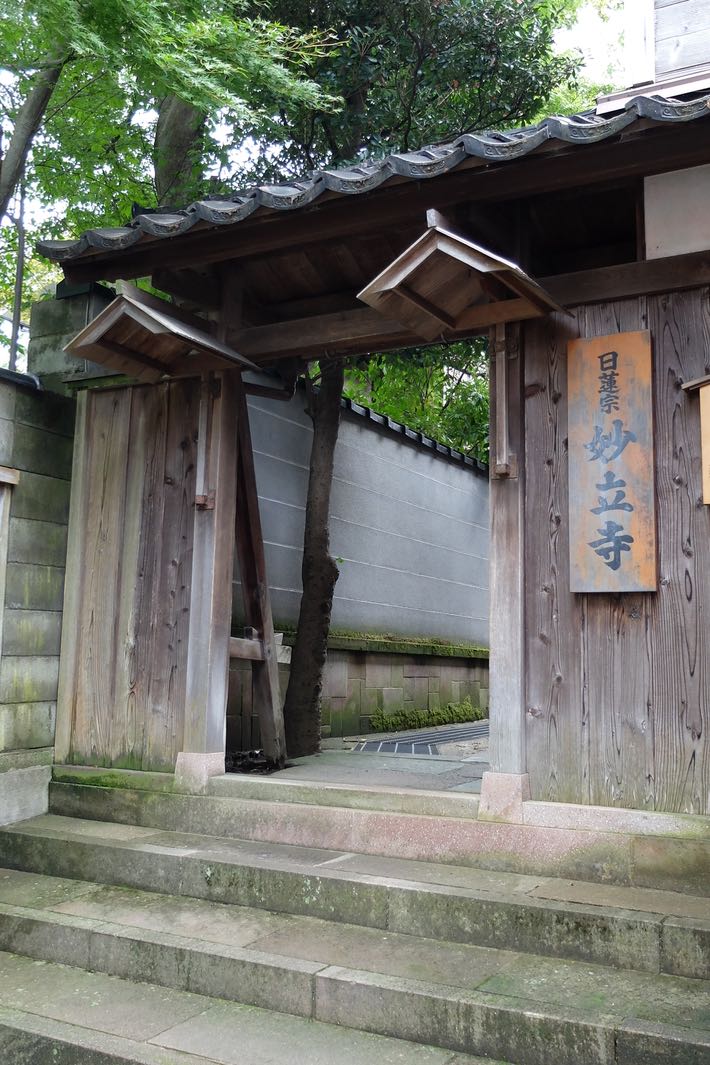
Our first stop was the well preserved Nishi (east) Chaya (teahouse) district and the Myoryuji (Ninja) Temple which served as a disguised military outpost in the time of the shogun rulers (founded in 1653).  
Nishi Chiya was a beautiful and historic old part of town for a wander around the laneways......


I think I will have to produce a coffee table book with all these beautiful images I have found in Japan (will be quite a stretch for my trusty old Snapfish publisher I think!)

 ......and beautiful contemporary buildings too!

Japan has the most beautiful and most immaculately clean public toilets in the world (they're very high tech too), and plenty of them!

There was only one museum in Nishi Chaya - the Shiryokan Museum, celebrating the life of one of Japan's authors of the early 19th century. It was a beautiful little museum (but all in Japanese so hard for us to learn about).


 I like the way many Japanese women dress too - especially this older lady's outfit!
Next stop was at the famous Kanazawa Castle - established in 1583, but largely destroyed by successive fires over time. The castle is in the midst of an ambitious restoration and rebuilding phase and is already looking pretty spectacular...This Castle Gate was  only finished in the past year. 

This beautiful turret is part of the original castle's long storehouse rebuilt about 15 years ago.


The quality of work and design evident in the rebuild of the castle is amazing - no detail has been left to chance - even these simple wooden platforms are perfectly proportioned and spaced!

The Kenrokuen Garden, our next stop, is classified as one of Japan's best (big call!). The grounds used to be the outer garden of nearby Kanazawa Castle. They were first opened to the public in 1871.


We'd been walking a long time by now and it was starting to rain....so we headed back to the Loop Bus and got dropped off at the Omicho (undercover) Market. Most of the shops specialise in high quality seafood. We got there a bit before 3.00pm and produce was mostly sold out in many of the stalls. Rod managed to score this freshly roasted calamari and Rob and I shared some out of this world fresh and flavoursome sashimi as a late lunch snack.
As the rain poured down we found a cosy corner and a grande cup of latte at Starbucks (!!) to kill some time before the rain eased again. Eventually we found our way back to the amazing Kanazawa Station - finding some time to admire the architecture before doing an hour or so of shopping in the beautiful retail areas near the station.


Another yummy dinner tonight - ramen noodles, gyoza and beer and Maxie managed to find us some of our favourite rice balls with red bean paste for dessert. 

Wednesday, September 21, 2016

Hiroshima

I guess most people know that the first atomic bomb in human history was dropped on Hiroshima on the 6th August 1945.  As kids growing up in Brisbane we were always told that the Americans "dropped the bomb to stop the war". The people who told us that (thereby justifying it) must never have visited The Peace Memorial Park in Hiroshima - dedicated to everlasting peace and to the hundreds of thousands of victims of the atomic blast, and the truth about what happened in the blast.

Hiroshima was a lively vibrant city - about the size of Canberra when the bomb dropped - without warning at 8.15am on the 6th August. A lot of young high school age children were out and about that morning doing voluntary work building firebreaks to counter the expected bombing attacks from the allied forces (although no one was expecting an atomic bomb attack). So many of them were killed in the blast (or more horribly in the days and weeks after the blast) The National Peace Memorial Hall is dedicated to the stories of each of the almost 400,000 victims (killed or exposed to lethal radiation) of the atomic bomb attack.

This beautiful sculpture represents all the clocks that stopped at 8.15am on the 6th of August and the broken shards (of buildings) surrounding it have been collected from the wreckage of the bomb blast.
The Park has a number of monuments. This one is dedicated to Korean victims and survivors of the bombing (there were a lot of Koreans in Hiroshima at the time).
The most recognisable and poignant monument is the "Atomic Bomb Dome" building. The bomb is believed to exploded almost directly above the building and it is one of the few left standing near the epicentre of the blast. It was declared a UNESCO world heritage site in 1996.

The Atomic Bomb Memorial Mound contains the ashes of 70,000 unidentified victims of the bomb.
I found the Children's Peace Monument very poignant - the statue is based on the true story of Sedako Sasaki (and her thousand paper cranes), who died in 1954 as an 11 year old, from leukaemia, the result of radiation suffered as a two year old during the bombing.

This group of children was making a presentation of their folded cranes today and then standing in silence to the memory of the children who were victims of the A-bomb attack.
The memorial has a constantly replenished collection of paper cranes stored in special cases around its perimeter - the city of Hiroshima encourages it!!!

The Memorial Cenotaph holds the names of all the people killed by the bomb. It was the first memorial monument built in the park (in 1952).
We spent quite a while in the Peace Memorial Museum - a harrowing place to visit and deeply moving. This model of the city shows how the bomb exploded about 600 metres above the epicentre, creating an unimaginable fireball (temperatures between 3000-4000oC) and explosive pressure and then lethal levels of radiation - affecting the whole of the city.

The most harrowing exhibits were of the charred remnants of clothing worn by children when the bomb hit.....
These tiny paper cranes were made by Sedako in her final days (they are minute - and made of cellophane paper!).
Barak Obama visited Hiroshima this year, the first sitting US President to do so. He didn't apologise for the bombing on behalf of the American people- but I did like his message all the same. 

 We are going to miss this man!

We all felt very sobered by our visit to the Peace Memorial Park - and spent a lot of the day processing it and trying to analyse why the US launched the attack and why they've tried to justify it ever since......

We checked out of the grand old Hotel Granvia around lunchtime and caught the train to Kanazawa (via Osaka). Train travel is so easy in Japan. We arrived in Kanazawa tonight, a bit before 6.00pm, exactly as anticipated - ready for the next adventure.

Tuesday, September 20, 2016

To Hiroshima and Miyajima

We caught the 8.23am Shinkansen from Kyoto this morning and arrived in Hiroshima a bit after 10.30am. We're staying at the Granvia Hotel in Hiroshima which is located at the main railway station - so no difficulty finding it!

After unloading our bags at the hotel caught the train to Miyajima-guchi about 30mins south west of the city. From here it was only a short walk before we were on the ferry approaching Miyajima (Shrine Island).
 Those lines of netting in the sea are oyster beds......

Miyajima is most famous for its giant torii gate which at high tide seems to float on the water.
But our first goal on this island was to find lunch! We struck it lucky at a little Okonomiyaki joint in the main street of the Miyajima "pier".
Those are four big fat oysters (dusted with seaweed powder) on top of that cabbage, bean sprout, noodle, pancake & egg mixture - absolutely delicious -especially with bottle of Miyajima beer.


 Like the torii gate the Itsukushima Shrine's main buildings are built over water. 
As we walked up a slight hill just behind Itsukishima Shrine to get a better view of the Senjokaku Shrine's massive main hall we were quite amazed to see this landscape marvel. This gentleman was quietly trimming pine needles on this espaliered branch of a black pine tree. 
 ... to create this beautiful hedge - growing as a side branch from that 3-4 metre high black pine tree in the pic below!!

The massive wooden hall of the Senjokaku Shrine (dating back to 1587) is approx the size of 1,000 tatami mats.

From the small township we started walking deeper into the forest into the Momijidani Park lands (Japanese for "Maple Valley").  I was very impressed with these ryokans on the edge of the park....


We walked as far as the Momijidani "ropeway" and decided to catch the cable car ride up to the Shishi-iwa Observatory.

 From the Shishi-iwa Observatory we got spectacular views looking back to Hiroshima
 ...and out to the Seto inland sea - and all those islands!

You can see Mount Misen, the highest peak on the island in the pic below. It's about a kilometre walk (uphill) from where we are at the Shishi-iwa Observatory......we didn't make it that far today. This whole area is UNESCO world heritage listed, both for its prehistoric forests and for the island's cultural significance (ancient Buddhist sites).

The tide was very low as we were leaving Miyajima today - kinda spoiling the impact of the "floating" Itsukushima Torii Gate somewhat!
The wild deer of Miyajima are very comfortable living in amongst the shops and visitors.....

We didn't get back to the Hotel Granvia in Hiroshima until after 6.00pm. We left it too late and got lost anyway trying to find our way to where it was all happening in the city so ended up having a quiet night at the hotel (exhausted after another 17,000 steps today)!